
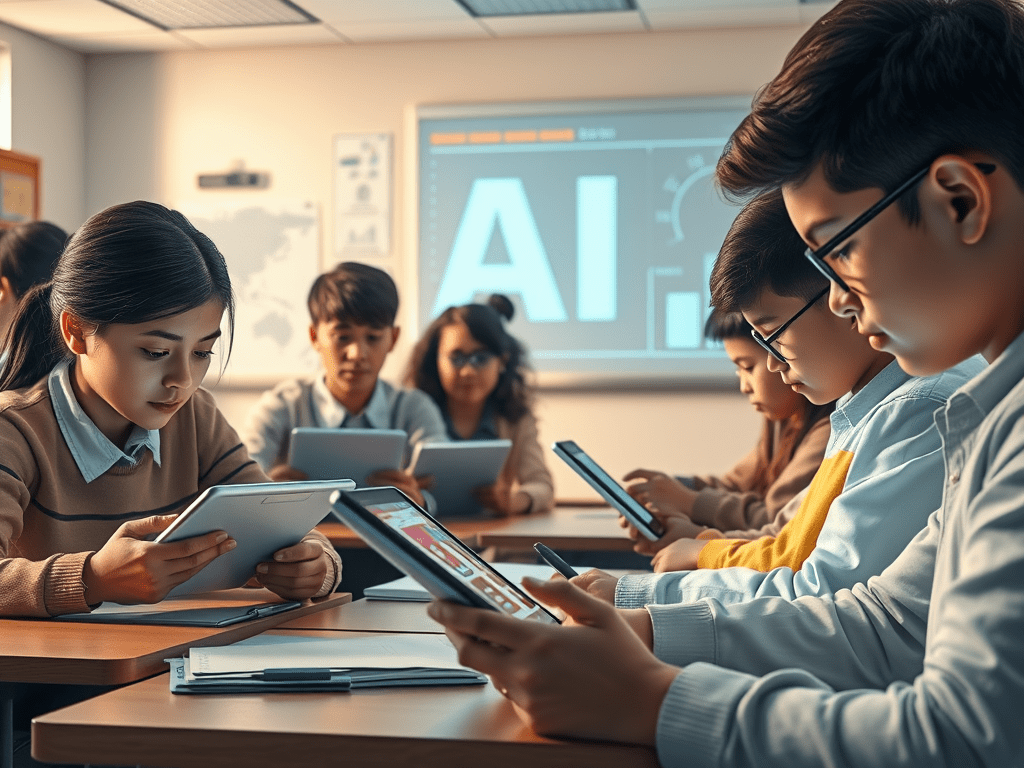
Over the past five years, artificial intelligence has developed rapidly across various fields. The emergence of Large Language Models and the widespread use of generative AI like ChatGPT have not only exerted significant influence on society and technological advancement but have also spurred numerous studies within the education sector. By the end of June 2024, the total number of global AI tools had surpassed 12,711, among which 155 were specifically designed for learning. This figure further increased to 34,446 by April 2025(Mononen, 2025), reflecting the sharply growing attention and educational application of AI in recent years. Furthermore, in a bibliometric analysis of 217 AI in education publications conducted by Bahroun et al. (2023), the primary directions of AI in education encompassed medical education, nursing education, computer science, general education, higher education, engineering education, among other subjects and categories, demonstrating diverse applications across these areas. Facilitated by ChatGPT, the extensive use of AI tools such as AI chatbots (e.g., BlenderBot and LaMDA) and AI Text Generators (AITG) primarily points towards optimizing teaching assessment, providing personalized learning support, and developing intelligent tutoring systems. Among these, personalized learning support is particularly prominent due to its strong application background, enhanced by AI’s efficiency and quality advantages in processing large volumes of data (such as student performance, reflections, etc.)(Ayeni et al., 2024), thereby strengthening its ability to adapt to the individual needs and learning styles of students and creating individual dynamic learning environments.
(to be continued)
 Teenage Philosopher
留下评论